
The Problem
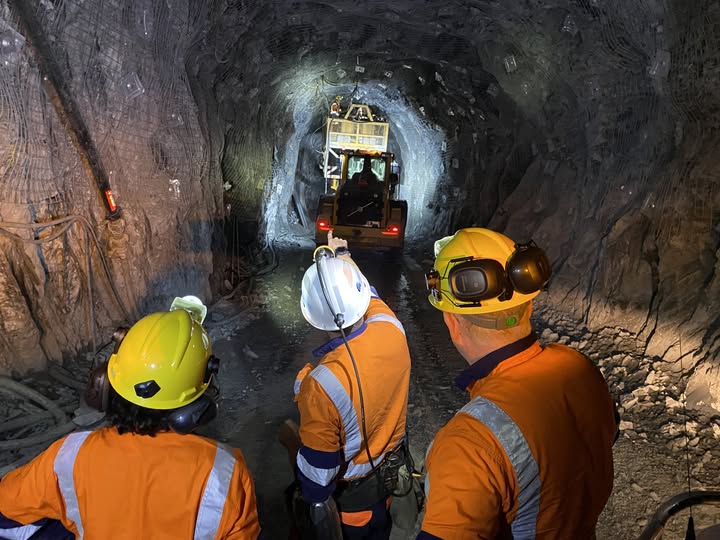
Underground mines need to know where their people are. In an emergency — fire, fall of ground, seismic event — the first question is always the same: who is underground, and where?
GPS does not penetrate rock. Most existing solutions are tied to specific cap lamp vendors or Level 9 CAS/PDS systems, forcing mines into expensive proprietary upgrades just to get basic personnel location data. Mines that already invested in collision avoidance and cap lamp systems should not have to rip them out to add a Missing Persons Locator.
From Dispatch to Tracking
We have spent over a decade building RFID-based positioning systems for underground dispatch at mines like Cullinan Diamond Mine and Palabora Mining Company. Those systems track LHDs — heavy machines moving through tunnels. The positioning principles are the same for people: tags on the asset, readers at known locations, data over the mine's network to a central system.
OpenTrack applies that field-proven experience to personnel tracking, using Bluetooth Low Energy beacons and UHF RFID tags instead of the vehicle-mounted readers used in dispatch.
What We Built
OpenTrack is a complete Missing Persons Locator platform — hardware selection, software, and deployment — built on an open architecture with no proprietary dependencies.
- BLE beacons and UHF RFID tags: Personnel carry lightweight tags that are read by underground nodes. The combination of BLE and UHF RFID provides reliable detection across varying tunnel conditions without depending on any specific cap lamp or CAS/PDS vendor
- COTS readers: All underground hardware is commercial off-the-shelf. No custom proprietary equipment, no inflated pricing, no single-vendor dependency. If a reader fails, it gets replaced with a standard unit
- Mine network integration: The system runs over the mine's existing hard-wired LAN. No parallel network required — the readers connect directly into infrastructure the mine already maintains
- OpenTrack Server: Central processing of all tag reads, building a real-time picture of personnel positions across every equipped level
- Web-based interface: Safety personnel access the system through any browser on the mine network. No client software to install, no per-seat licensing, no specialist training required
What Makes It Different
Most MPL solutions on the market are extensions of existing proprietary systems. They work — but only if you buy everything from the same vendor. OpenTrack was designed from the ground up to be independent.
- Cap lamp agnostic: Works with whatever cap lamps the mine already uses. No fleet replacement required
- CAS/PDS independent: Does not require a specific Level 9 system. Mines that already have collision avoidance and proximity detection keep what they have
- Fully documented: Every component, every interface, every design decision is documented. The mine's own team can maintain and administer the system without calling us
- No vendor lock-in: Open architecture means the mine owns the system, not the supplier. Standard components, standard protocols, full transparency
Lessons
Personnel tracking underground is not a new problem. What is new is solving it without forcing the mine to buy into yet another proprietary ecosystem. Mines already carry too many single-vendor dependencies — adding another one just to locate people in an emergency is the wrong trade-off.
The technology behind OpenTrack is not exotic. BLE and UHF RFID are well-understood, field-proven technologies. The difference is knowing how to deploy them underground — where tunnels attenuate signals, dust coats everything, and infrastructure gets moved as mining advances. That knowledge came from years of building dispatch systems in exactly these conditions.